Early childhood is an important period of human intelligence development. According to past researches, the nervous system of human is sensitive to the development of information and abilities in early childhood (Pem, 2011). A nice early childhood developmental intervention has a lasting effect on brain development and could effectively improve the level of later development (Heckman, 2011). Development and promotion of early childhood education is one of the best ways to increase economic growth and promote sustainable development of citizens (Kumari et al., 2019).
· The importance of early childhood development
Preliminary estimates from UNICEF’s early child development index (ECDI), based on reports from nearly 100,000 caregivers, shows that 36· 8% of children aged from 3 to 4 in low – and middle-income countries are lack of basic cognitive and social-emotional skills. ECDI scores are positively correlated with the interaction between professionals and children (e.g.: reading, playing, singing, etc.), indicating the importance of professional guidance for children’s development (McCoy et al., 2016).
According to the world bank’s statistics of low-income and middle-income countries in 2020, China, as a developing country, is still in the range of middle-income countries (The World Bank Group, 2020). Thus, specialized health care sectors in low-income and middle-income countries could change the developmental environment of young children in low-income and middle-income families by implementing and supporting a range of early childhood education policies (Elder et al., 2014; Walker et al., 2013). One study showed that after a long-term follow-up, children in low-income countries who received early professional education programme, had a higher cognitive functioning and had lower rates of anxiety, depression or violence than other children who grew up in the same environment when they become adults, and they also had higher personal incomes than the rest of the control group (Gertler et al., 2014; Grantham-McGregor et al., 2007; Walker et al., 2013).
· Early childhood development programme in China
In the United Nations-China early childhood development report (Unicef.cn, 2019), integrated early childhood development services for children from 0 to 3 years old. They have been provided in rural and urban suburbs through a pilot project with the Chinese government, based on community-based management.
These aim servises include:
- Regular healthy growth and development assessment, consultation and follow-up
- Nutritional advice and supplement supply
- Provide parents with suggestions for responsive care and early developmental stimulation from professional supervisors
- Provide play, learning, and parenting advice to early childhood development centers or community groups
- Help vulnerable families cope with the risks of child protection, and help them with financial, social security and security issues
· Connect with the sustainable development goals
Children’s brains develop most rapidly in the first three years of life, during which they are highly sensitive to positive stimuli or harmful stresses in the environment (Davies et al., 2002). Nutrition, play games and any other kinds of stimulations could promote children’s cognitive development, while malnutrition and harmful stress such as violence and neglect can have long-lasting negative effects on children’s physical, cognitive and emotional development (Bornstein, 2007). If a child does not reach his or her fully developmental potential before the age of three, it will affect his development throughout his life (Bradley et al., 1989). Countries that invest less in early childhood development also achieve less in health and education (McCoy et al., 2016).
Through the promotion and development of early childhood education programs, China can achieve more sustainable development goals in the future.
These objectives include, but are not limited to:
1. Develop the community construction, improve the security degree and average quality of the community, create a good living environment for more children, protect their mental health, can avoid these children to be subjected to violence, resulting in the overall security level of the community decline (Walker et al., 2013)
2. Professional parenting skills will also increase the quality of education, leading to higher levels of education and employment, and laying the foundation for a more skilled career (Elardo et al., 1975; Grantham-McGregor et al., 2007)
3. Increasing nutrition and providing professional services can enable these children to develop better learning abilities, reduce the gap between rich and poor, and ensure the quality of life and mental health of children from poor families (Elder et al., 2014; Mussell et al., 2004)
What could we do?
The UNICEF also provides different early childhood development intervention services for different situations in the communities which supports:
1. Integrated community early childhood development service.
The United Nations to promote early childhood development team and the all-china women’s federation in 170 communities or villages to carry out the pilot recruitment and training early childhood development of female volunteers (Unicef.cn, 2019). The aim of this is to provide a professional training, in order to effectively develop and manage community services, including running early childhood development of community service centre, form a team game and home visitors to encourage parent-child interaction and parental care (Roggman et al., 2001).
2. Integrate early childhood development into the medical and health service system.
Improve the quality of nurturing care by providing integrated early childhood development services (including health, nutrition, responsive care, early development stimulation and child safety) through health services, home visits and community group activities (Britto et al., 2017). The programme also calls for the training of professional health professionals to ensure professional support for children at risk of stunting, including timely detection, counselling or transfer. Professionals also help families learn scientific parenting methods and techniques (Booth & Booth, 1993).
3. To ensure adequate protection for young children.
The United Nations early childhood development promotion team, in cooperation with the Chinese ministry of civil affairs, provides professional social services to children and families who have difficulty accessing welfare and protection services (Unicef.cn, 2019). Through these efforts, children could be help for avoid the risk of violence at an early age and get a good support from professional programme home visitors (Gomby et al., 1999).
Summary
Family support and consolidation policy programmes include helping caregivers access quality services, skill building and support (Cleveland et al., 2006). The intergenerational parenting policy programme deals with measures to care for and protect the caregiver’s physical and mental well-being, as well as to improve their nurturing abilities (Mussell et al., 2004). The early learning protection policy programme will support both the child and the caregiver to create a nurturing learning environment (Britto et al., 2017).
Overall, investments in early childhood development affects children’s skills in all aspects of life, leading to better job prospects in adulthood and a greater contribution to the health of the countries in which they live. The importance and returns of investing in early childhood development is important for a country’s economic growth and achieving the sustainable development goals.
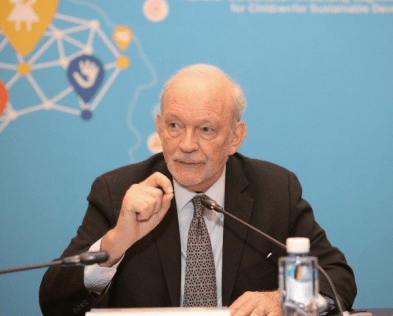
…China is not only the world’s second largest economy, but also the world’s second most populous country with 270 millions of children. Every child is an opportunity for national progress…Therefore, it is good to see that early childhood development programmes has been incorporated into the Chinese government’s major priorities.
UNICEF Executive Director Anthony Lake (2017)
References
Britto, P. R., Lye, S. J., Proulx, K., Yousafzai, A. K., Matthews, S. G., Vaivada, T., … & MacMillan, H. (2017). Nurturing care: promoting early childhood development. The Lancet, 389(10064), 91-102.
Booth, T., & Booth, W. (1993). Parenting with learning difficulties: Lessons for practitioners. British Journal of Social Work, 23(5), 459-480.
Bornstein, M. H. (2007). Parenting science and practice. Handbook of child psychology, 4
Bradley, R. H., Caldwell, B. M., Rock, S. L., Ramey, C. T., Barnard, K. E., Gray, C., … & Johnson, D. L. (1989). Home environment and cognitive development in the first 3 years of life: A collaborative study involving six sites and three ethnic groups in North America. Developmental psychology, 25(2), 217.
Cleveland, G., Corter, C., Pelletier, J., Colley, S., Bertrand, J., & Jamieson, J. (2006). A review of the state of the field of early childhood learning and development in child care, kindergarten and family support programs. Prepared for the Canadian Council on Learning. Toronto, Canada: Atkinson Centre for Society and Child Development, University of Toronto. Retrieved March, 10, 2010.
Davies, P. T., Harold, G. T., Goeke-Morey, M. C., Cummings, E. M., Shelton, K., Rasi, J. A., & Jenkins, J. M. (2002). Child emotional security and interparental conflict. Monographs of the society for research in child development, i-127.
Elardo, R., Bradley, R., & Caldwell, B. M. (1975). The relation of infants’ home environments to mental test performance from six to thirty-six months: A longitudinal analysis. Child development, 71-76.
Elder, J. P., Pequegnat, W., Ahmed, S., Bachman, G., Bullock, M., Carlo, W. A., … & Lombardi, J. (2014). Caregiver behavior change for child survival and development in low-and middle-income countries: An examination of the evidence. Journal of Health Communication, 19(sup1), 25-66.
Gomby, D. S., Culross, P. L., & Behrman, R. E. (1999). Home visiting: Recent program evaluations: Analysis and recommendations. The Future of Children, 4-26.
Grantham-McGregor, S., Cheung, Y. B., Cueto, S., Glewwe, P., Richter, L., Strupp, B., & International Child Development Steering Group. (2007). Developmental potential in the first 5 years for children in developing countries. The lancet, 369(9555), 60-70.
Heckman, J. J. (2002). Invest in the Very Young.
Kumari, A., Sanijwan, S., & Sheoran, S. (2019). Early childhood and long term development: A systematic review. Indian Journal of Health and Wellbeing, 10(1-3), 48-50.
McCoy, D. C., Peet, E. D., Ezzati, M., Danaei, G., Black, M. M., Sudfeld, C. R., … & Fink, G. (2016). Early childhood developmental status in low-and middle-income countries: national, regional, and global prevalence estimates using predictive modeling. PLoS Medicine, 13(6).
Mussell, B., Cardiff, K., & White, J. (2004). The mental health and well-being of Aboriginal children and youth: Guidance for new approaches and services. Children’s Health Policy Centre.
Neshovski, R. (2020). Home – 2019 – United Nations Sustainable Development. Retrieved 14 February 2020, from https://www.un.org/sustainabledevelopment/
Pem, D. (2015). Factors affecting early childhood growth and development: golden 1000 days. Adv Practice Nurs, 1(101), 2573-0347.
Roggman, L. A., Boyce, L. K., Cook, G. A., & Jump, V. K. (2001). Inside home visits: A collaborative look at process and quality. Early Childhood Research Quarterly, 16(1), 53-71.
The World Bank Group. (2020). World Bank Country and Lending Groups – World Bank Data Help Desk. Retrieved 14 February 2020, from https://datahelpdesk.worldbank.org/knowledgebase/articles/906519-world-bankcountry-and-lending-groups
Unicef.cn. (2019). Project overview: early childhood development. Retrieved 14 February 2020, from https://www.unicef.cn/early-childhood-development-factsheet
Walker, S., & Chang, S. M. (2013). Effectiveness of parent support programmes in enhancing learning in the under-3 age group. Early Child Matt, 120, 45-9.
 Blackwell643-4020site
Thank you for your blog post. I was surprised to find that China is still considered to be a middle-income country. When I read into your World Health reference, I realised that my surprised was due to China also being the world’s second largest economy. I now understand that how countries income status is calculated is more complicated than just the size of their economy, and rates such as the country’s population’s average annual income is also taken into consideration.
I noticed how in point 2 of your ‘what can we do’ section, you mentioned the integration of early childhood into existing medical and health services by utilising and delivering further training to existing professionals. Conversely, in my blog I explored how early childhood development programmes can also train young people in the community to deliver pre-primary education programs. Training young adults who were seeking training and employment opportunities to deliver a pre-school curriculum, had a significant effect on children’s readiness for school measures. This program targeted rural communities in the Sindh province of Pakistan. I find it interesting how early childhood programs seem to target groups of people to train and deliver the interventions. Considering this, I would be interested to explore further where there is existing research, perhaps even meta-analysis’, that compare the success rates intervention success between professionals and paraprofessionals
赞赞
Hello, blackwell643, this is CJ. I enjoy reading your post. You explained the importance of early childhood development and how it is related to the Sustainable Development Goals. I agree with you that early childhood is a critical phase of human development. Circle of poverty is a set of events by which debt, once started, is likely to continue unless there is outside intervention. Tones of study have already proved the point that correct early childhood intervention can help people break the circle of poverty. Although the Chinese government is doing things like provide parents with suggestions for responsive care, nutritional advice, and supplement supply, help vulnerable families cope with risks of child protection. There are still a lot of people who need help from China. Children within the first three years of life are the best time for early childhood intervention took place.
You mention we could have integrated community early childhood development service, Integrate rapid childhood development into the medical and health service system. I agree with you that children could be beneficial for these actions, but it will take a lot of effort to accomplish it fully. Investments in early childhood development not only have a massive effect on children’s life but also is the most cost effective for government and family. Overall I think it’s an interesting blog and I learned a lot by reading it.
赞赞