
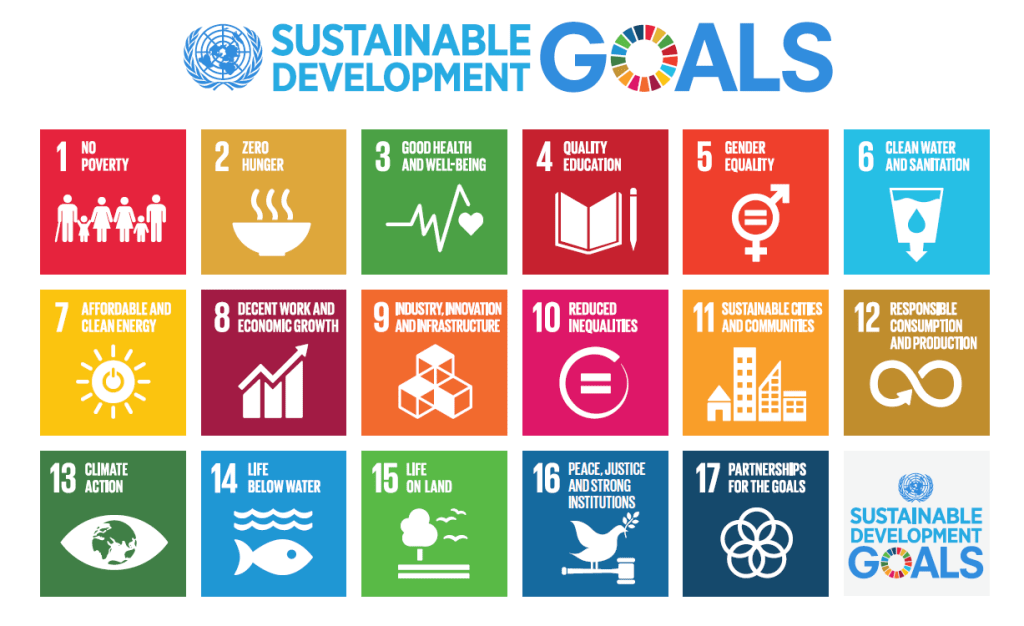
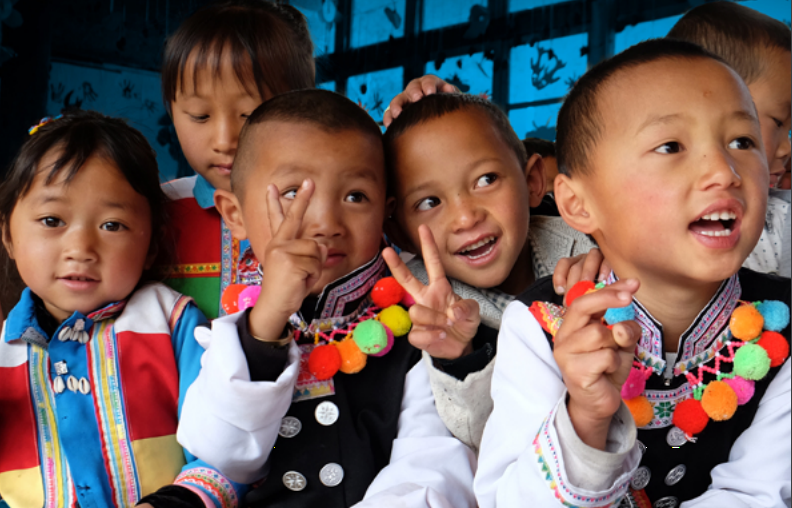
Early Childhood Education mostly refers to an important part of early childhood education, especially from birth to the age of 2 (Currie, 2011a). Under the guidance and advice of the United Nations, many developing countries have in recent years begun to establish local policy support and plans for early childhood education in pursuit of the sustainable development goals of the United Nations (Unicef, 2019). Early childhood programs can influence a child’s intelligence level and cognitive behaviour in their future life (Currie, 2011a). Early childhood education can also engender social and economic benefits (Galinsky, 2006). Therefore, early childrenhood program could promote community building in low and middle-income countries, and provide children in these areas with more opportunities for future employment.
Development of Children
Children go through many physiological changes, especially with the growth of the brain and nervous system and the development of physical movements (Best, 2010). These also have a significant impact on their psychological development. According to the synergetic theory, there are various manifestations of a child as a result of maturity and the spontaneous improvement due to environmental and educational influences, such as action, language, emotion, cognition (Dumas et al., 2001).
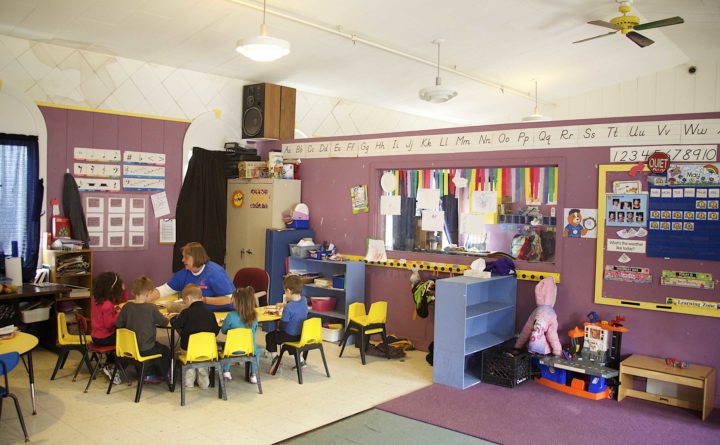
There are other aspects of inherent spontaneous nature such as, autonomy and creativity, which can be described as the interaction between the internal and external environment with various information and energy (Liu et al., 2011). Adults should respect the subjectivity, practicality, wholeness, connection and creativity of children’s development. Access to early education does not necessarily guarantee high-quality educational outcomes, and so early childhood interventions place a strong emphasis on the mental health of children (Currie, 2011b).
Advantages for children’s mental health
An early systematic childhood education curriculum can help the early years’ children to improve their cognitive and learning ability, and to lay the foundations for their future development. Early childhood intervention can deliver psychological and emotional stability for children, to guide children in early childhood education activities and focus attention and participation in positive interaction (Hemmeter et al., 2006). In early childhood intervention, the interaction between the child and the caregiver includes social and attention guidance of the child by the intervener (including professional educators or trained early childhood education volunteers, etc.), which can engender positive emotional outcomes for the children, as well as the development of other interpersonal relationship cognition (Currie, 2011a; Hemmeter et al., 2006).
Children who receive a professional early years’ education are more confident and perform better in adolescence. There is more positive peer representations than for those children who had not experienced early childhood education interventions; they enjoy a more intimate and supportive friendship (Kirk et al., 2011).

A 17-year follow-up study also found that children who exhibited more autonomous sharing at ages 4 and 5 have relatively mature levels of prosocial moral reasoning throughout childhood, adolescence and into early adulthood; they are more willing to help others, are more considerate of others, and more exhibit sophisticated reasoning about pro social issues and social responsibility (Awartani & Looney, 2015). It can be seen that pro-sociality can be established very early and has considerable stability. Children who exhibit depressive, irritable and aggressive behaviour between the ages of 3 and 10 could be predicted to be more vulnerable to aggression and other antisocial tendencies. This means that aggression, once established, can have a certain degree of negative impact on an individual’s future mental health (Noddings, 2003).
Advantages for parents’ mental health
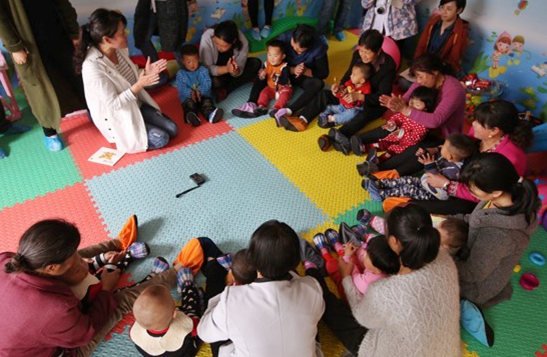
Early childhood intervention is also beneficial to the mental health of parents. It has been shown that through early education, parents can realize the importance of children’s temperament, and by improving parental understanding and attitudes, parents can gain better understanding and can accept the characteristics of children’s temperament (Mensah & Kiernan, 2010). A good parent-child relationship can be established from an early stage, providing a suitable living environment for children. In addition to learning about scientific parenting, parent participation in early years’ intervention programs with their children can stimulate their enthusiasm for participation and create interactive communication platforms for parents (Engert et al., 2009).
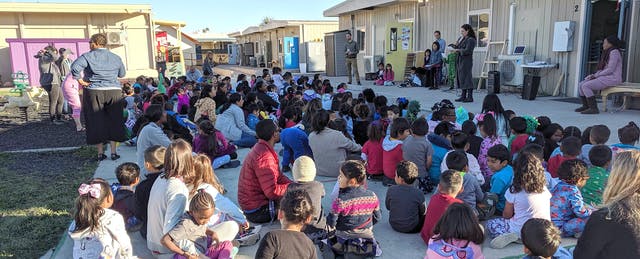
Parents can seek the help of professional interventionists when they encounter child rearing problems, whilst professionals may provide partial answers to parental questions based on their professional knowledge (Schertz & Odom, 2007). When professional interventionists do encounter problems that need to be resolved by any specific specialty, they can guide parents to seek help from specific specialty clinics, for which parental acceptance will be higher. After receiving and participating in the Early Childhood Intervention Program, parents will be able to investigate their mental health status through SCL-90, and perhaps realise that their anxiety and obsessive-compulsive symptoms have been significant and have seen improvement (Sonego et al., 2013).
After systematic guidance by professional interventionists and interaction with other parents, parents can receive psychological support, and they can gradually change their words and actions, which can have a positive effect on the whole family atmosphere and form a virtuous circle (Schertz & Odom, 2007; Sonego et al., 2013). This can effectively reduce anxiety, irritability and the physical symptoms brought about by parenting.
Summary
In summary, early childhood interventions do not only have a positive impact on children’s mental health, but also makes them more sociable in the future, reducing the likelihood of aggression and depression. These early interventions also teach parents involved in the intervention program how to raise children in a scientific manner, reducing the anxiety, depression or helplessness they experience in parenting.
These positive effects could help low and middle-income countries to build a more stablized and developmental enviorment of their society, same time raise more opportunities for children for employment in the future. Early childhood interventions could supporting and building better early childhood education systems is a priority for low and middle-income developing countries. To conclude, early childrenhood intervention bring several advantages for developing countries and has a sigificant positive influence for these countries or ares’ future.

References:
Awartani, M., & Looney, J. (2015). Learning and well-being: An agenda for change. Doha: Qatar Foundation.
Best, J. R. (2010). Effects of physical activity on children’s executive function: Contributions of experimental research on aerobic exercise. Developmental Review, 30(4), 331-351.
Currie, J. (2001a). Early childhood education programs. Journal of Economic perspectives, 15(2), 213-238.
Currie, J. M. (2001b). Early childhood intervention programs: what do we know?. Brookings Institution, Brookings Roundtable on Children.
Dumas, J. E., Lemay, P., & Dauwalder, J. P. (2001). Dynamic analyses of mother–child interactions in functional and dysfunctional dyads: A synergetic approach. Journal of Abnormal Child Psychology, 29(4), 317-329.
Engert, V., Joober, R., Meaney, M. J., Hellhammer, D. H., & Pruessner, J. C. (2009). Behavioral response to methylphenidate challenge: influence of early life parental care. Developmental Psychobiology: The Journal of the International Society for Developmental Psychobiology, 51(5), 408-416.
Galinsky, E. (2006). The economic benefits of high-quality early childhood programs: What makes the difference?. CED.
Hemmeter, M. L., Ostrosky, M., & Fox, L. (2006). Social and emotional foundations for early learning: A conceptual model for intervention. School Psychology Review, 35(4), 583-601.
Kirk, S., Gallagher, J. J., Coleman, M. R., & Anastasiow, N. J. (2011). Educating exceptional children. Cengage Learning.
Liu, D., Chen, X. P., & Yao, X. (2011). From autonomy to creativity: a multilevel investigation of the mediating role of harmonious passion. Journal of Applied Psychology, 96(2), 294.
Mensah, F. K., & Kiernan, K. E. (2010). Parents’ mental health and children’s cognitive and social development. Social psychiatry and psychiatric epidemiology, 45(11), 1023-1035.
Noddings, N. (2003). Happiness and education. Cambridge University Press.
Schertz, H. H., & Odom, S. L. (2007). Promoting joint attention in toddlers with autism: A parent-mediated developmental model. Journal of autism and developmental disorders, 37(8), 1562-1575.
Sonego, M., Llácer, A., Galán, I., & Simón, F. (2013). The influence of parental education on child mental health in Spain. Quality of Life Research, 22(1), 203-211.
Unicef.cn. (2019). Project overview: early childhood development. Retrieved 14 February 2020, from https://www.unicef.cn/early-childhood-development-factsheet


 Blackwell643-4020site